
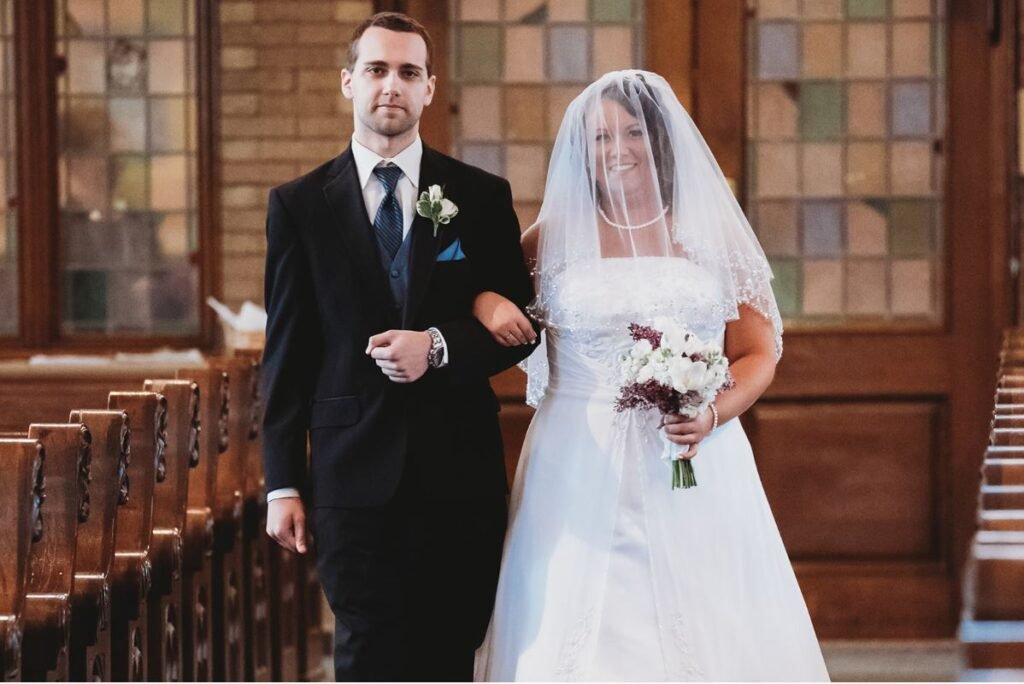
Delaware Park is beautiful and every Buffalo wedding gallery has the same three frames from it. The Japanese Garden bridge. The rose garden. The lawn near the Albright-Knox.
Nothing wrong with those pictures. They’re just not yours specifically.
Erie County has an unusual density of parkland, much of it Olmsted-designed or state-managed, and several sites produce better photographs than the ones everybody uses. These five are worth the drive, with honest notes on access, permits, and what each one actually gives you on camera.
What Makes a Park Good for Wedding Photos
Before the list, the criteria. Most “best locations” articles skip this and just describe scenery.
A park photographs well for weddings when it has:
- Edges. Treelines, water lines, walls, or paths that give a composition structure. Open lawn is boring.
- Layers. Something near, something middle, something far. Flat parks produce flat images.
- Shade in the right place. Open sun on a wedding dress at 3 pm is a losing battle.
- A parking situation that doesn’t require a hike. Someone is walking in formal shoes.
- Legal access. Permits, hours, and fees vary wildly and enforcement is real.
- Something other than trees. Structures, water, rock, or elevation change. Trees alone produce green mush.
Judge every location below against those six.
1. Chestnut Ridge Park, Orchard Park
The elevation is the point. Chestnut Ridge sits high enough that the overlook gives you a genuine view across toward the city and the lake, which almost no other park in the county offers.
What You Get
The casino building is a solid stone structure with arches and steps, useful when weather turns and useful as a background at any hour. Around it, the ridgeline drops away and gives you sky, which means you can shoot a couple against open air rather than against more trees.
Fall is exceptional here. The hillside turns and the elevation lets you shoot down into color rather than through it.
The Practical Notes
Parking is close to the main structures, which matters. The park is busy, particularly on weekends, so expect sledders in winter and picnics in summer within the frame. A photographer with a long lens can compress and isolate around them.
The overlook faces roughly west, which makes it a sunset location rather than a morning one.
2. Knox Farm State Park, East Aurora
This is the strongest all-around wedding photography property in the region and it stays surprisingly underused.
Why It Works
Knox Farm is a former estate, so it has the six criteria in one place. Open meadows with defined edges. Fence lines that run for hundreds of feet and give you leading lines from any angle. Stone and wooden estate buildings with real architectural character. Mature isolated trees standing in open field, which is the single most useful thing a portrait photographer can find.
That isolated-tree feature deserves emphasis. A large tree alone in a meadow gives you a subject, shade, a background, and scale simultaneously. Most parks have woods. Very few have single trees in open ground.
Light Behavior
The meadows are exposed, so midday is difficult and late afternoon is excellent. The treelines on the property edges provide shade blocks that move through the day.
The buildings give you a fallback for rain and a completely different texture from the fields, which means one location can produce two visually distinct sets.
Access Reality
It’s a New York State Park. Confirm current photography and permit rules directly with the park office, and check whether a wedding party of eight to twelve people needs anything beyond a standard vehicle entry. Rules change and the fine for guessing wrong is worse than a phone call.
3. Tifft Nature Preserve, Buffalo
Nobody expects a nature preserve on former industrial land to photograph well. It does, and the reason is contrast.
The Look
Boardwalks over marsh. Cattails and reeds at shoulder height. Water with the city’s industrial edges visible in the distance. It gives you a Buffalo-specific frame that a generic park cannot: nature reclaiming something, with the skyline or a grain elevator faintly present.
Autumn turns the marsh gold, which against a gray sky produces a color combination you won’t get anywhere else in the county.
The Constraints
It’s a preserve, and preserves have rules. Confirm what’s allowed for a wedding party before planning around it. Boardwalks are narrow, so large groups don’t work well. Two people plus a photographer does.
Bugs are real from June through August near standing water. Bring spray.
4. Como Lake Park, Lancaster
An Olmsted-influenced county park that gets a fraction of the attention Delaware Park does, with several of the same features.
The Frames
Stone bridges over Cayuga Creek. Mature hardwoods with open space beneath them, which is the ideal shooting condition. A pavilion structure for shade and rain. Water with defined banks.
The bridges are the reason to go. A stone arch gives a photographer a frame within a frame, a shaded position for the subject, and a background that reads as timeless rather than dated.
Timing
Heavily used for family gatherings and league sports on summer weekends. Weekday afternoons and early mornings are dramatically quieter.
The tree canopy means dappled light, which is the hardest light there is. Good photographers avoid it by placing subjects in full shade under the canopy rather than in the patchy edge. If you see a portfolio full of blotchy sunlight on faces, that photographer hasn’t learned this yet.
5. Reinstein Woods Nature Preserve, Cheektowaga
The most restricted site on this list and the most distinctive if access works out.
What’s Different
Old-growth forest with water. Trails through genuinely mature woods, which look nothing like the young second-growth trees at most parks. Ponds with still surfaces that produce reflections.
Deep forest is dark, and dark is an advantage. Light filtering down through a heavy canopy onto a subject in a clearing gives a natural spotlight effect that is close to impossible to fake.
Check First, Always
This is a preserve with educational and conservation priorities. Photography access for weddings may be limited or prohibited depending on current policy. Call before you plan. If access isn’t available, Reinstein’s character can be approximated in the wooded sections of Chestnut Ridge.
Comparison at a Glance
| Park | Best Season | Drive from Downtown Buffalo | Main Strength | Main Limitation |
| Chestnut Ridge | Fall | Around 25 minutes | Elevation and open sky | Crowded, west-facing only |
| Knox Farm | Late spring through fall | Around 30 minutes | Variety, fence lines, isolated trees | Exposed at midday, permit rules |
| Tifft Nature Preserve | Fall | Around 10 minutes | Unique marsh and industrial contrast | Narrow boardwalks, insects |
| Como Lake | Spring and fall | Around 20 minutes | Stone bridges, mature canopy | Busy weekends, dappled light |
| Reinstein Woods | Summer and fall | Around 15 minutes | Old-growth forest, reflections | Access restrictions |
Matching a Park to the Images You’re Missing
Most couples pick a park because someone recommended it. A better method is to look at what your day already gives you and pick the park that fills the gap.
| Your Venue Already Gives You | What You’re Missing | Park to Choose |
| A ballroom or hotel, all interior | Anything green or open | Knox Farm or Como Lake |
| A barn with fields around it | Water, stone, structure | Como Lake or Chestnut Ridge |
| Downtown loft with urban exteriors | Nature, softness, scale | Knox Farm or Chestnut Ridge |
| A lakefront venue | Forest, enclosure, intimacy | Reinstein Woods or Como Lake |
| A church plus a hall, no outdoor space at all | Everything outdoor | Knox Farm, it covers the most ground |
| A golf club with manicured lawn | Texture, wildness, character | Tifft Nature Preserve |
That last row comes up often. Golf course venues give you beautiful, even green, and every frame starts looking the same. Twenty minutes at Tifft gives the gallery something with an edge to it.
Run this exercise before you commit. It’s more useful than any ranked list, including this one.
The Permit Question, Straight
Skipping permits is common and it’s a bad gamble.
County and state parks in Erie County generally require some form of permission for organized photography, and requirements differ between a two-person elopement and a twelve-person bridal party arriving in two vans. Fees, when they exist, are usually modest. The cost of being told to leave mid-session is your entire portrait window.
Assign this task to one person and get it in writing. Ask specifically about:
| Question | Why It Matters |
| Is a permit required for wedding photography? | Base requirement, varies by park system |
| Does group size change the answer? | Bridal parties often cross a threshold |
| Are there restricted areas or closed sections? | Trails and structures close seasonally |
| What are the gate hours? | Early closures ruin golden hour plans |
| Is lighting equipment on stands allowed? | Affects night and fill-light work |
| Can vehicles get close to the site? | Determines walking distance in formalwear |
A photographer who works these locations regularly will already have the answers. That’s part of what you’re paying for when you hire locally, and it’s a good question to raise during a consultation with any Wedding Photography Buffalo studio you’re considering.
Two Honorable Mentions
These didn’t make the main list but solve specific problems.
Cazenovia Park, South Buffalo. An Olmsted park with a casino building, a creek, and mature trees. It’s close to downtown, rarely photographed for weddings, and the stone building gives you architecture in a park setting. Weaker than Como Lake on bridges, stronger on proximity.
Ellicott Creek Park, Tonawanda. Water, open lawn, and a covered pavilion. Nothing spectacular, but it’s genuinely convenient for weddings in the northern suburbs and it has parking directly beside usable ground. When the calendar is tight, convenience beats scenery.
Neither will produce a signature image on its own. Both will produce a solid twenty-minute set without costing you an hour of driving, which is the correct trade for a lot of couples.
Why Proximity Keeps Winning
Photographers can produce strong work in a mediocre park given good light and enough time. They cannot produce anything in a spectacular park they arrived at forty minutes late with eight minutes of sun remaining.
Rank your options by drive time first and scenery second. It feels backwards. It’s correct.
One Sentence for the Undecided
If you only have time for one location and you want the widest variety of images, go to Knox Farm.
How to Actually Use a Park Session
Booking a location is half of it. Using it well is the other half.
Give the session at least 45 minutes on site, not counting travel. Photographers need time to walk the ground before shooting, and rushing that step produces generic frames.
Pick three positions in advance and commit. Wandering burns your window. A photographer who has scouted will name three spots and route between them efficiently.
Bring a change of shoes and a bag for the dress. Grass is wet in the morning and after any rain, and a mud line on a hem shows in every frame afterward.
Schedule for the last ninety minutes of daylight. This is more important than which park you choose. A mediocre location in beautiful light beats a spectacular location at 1 pm every single time.
And check the park’s closing time against sunset. Several Erie County parks close gates before dark in the shoulder seasons, which means the best light happens after you’ve been locked out.
Conclusion
Delaware Park is fine. It’s also in everyone’s gallery, and the shots from it are interchangeable.
Chestnut Ridge gives you elevation. Knox Farm gives you variety and structure. Tifft gives you a frame that could only be Buffalo. Como Lake gives you stone and water. Reinstein gives you old forest, if you can get access.
Choose based on what your images are missing, not on what’s closest. Confirm permits in writing before the day. Give yourself 45 minutes on site and schedule it in the last ninety minutes of daylight.
Do that and you’ll come home with a set of portraits that nobody else in Western New York has, which is the entire reason to skip the obvious park in the first place.