
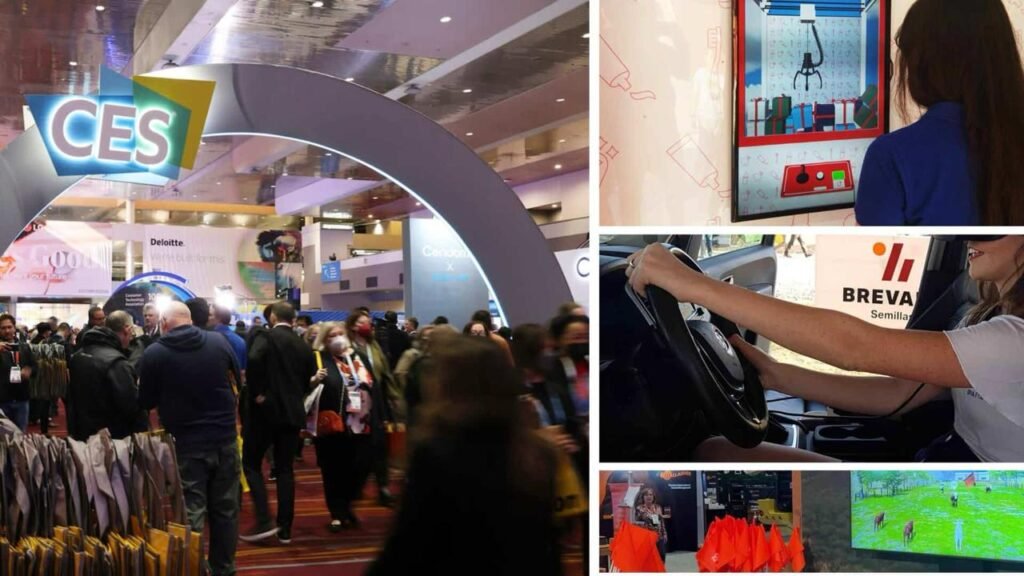
Every exhibitor knows the sinking feeling of walking a trade show floor an hour before doors open and realizing half the booths look identical: a backdrop, a few standing banners, a bowl of mints, and a rep hoping someone stops long enough to scan a badge. The math on that setup is brutal. Average cost per square foot at a major trade show can run into the hundreds of dollars once you factor in space rental, drayage, booth build, travel, and staffing. If the booth itself doesn’t earn attention, none of that spend converts into anything measurable.
Interactive activations change the equation, and the reason isn’t novelty. It’s dwell time, data capture, and recall the three variables that actually drive trade show ROI.
Trade Show: Why Dwell Time Is the Real Currency
Lead volume gets most of the attention in post-trade show reports, but dwell time is the metric that predicts lead quality. A visitor who spends 30 seconds at a booth might glance at signage and take a branded pen. A visitor who spends four minutes playing a branded game, using a claw machine, or stepping into a photo experience has had time to absorb messaging, talk to a rep, and form a memory tied to the brand.
Interactive elements are built specifically to extend that window. A reaction wall, a spin wheel, or a competitive game creates a natural loop: someone plays, other attendees stop to watch, and the crowd itself becomes the draw. That loop is difficult to manufacture with static signage no matter how well-designed it is.
Trade Show: Turning Foot Traffic Into Structured Data
The second variable is data capture, and this is where a lot of exhibitors leave money on the table. A badge scan tells you someone walked by. A game, kiosk, or interactive experience that requires an email address or contact info to play, participate, or receive results gives you a self-selected list of people who were engaged enough to opt in.
This matters for the ROI calculation because not all leads cost the same to acquire, and not all leads convert at the same rate. A visitor who spent time interacting with a brand experience and voluntarily handed over contact information is a warmer lead than one whose badge was scanned in a five-second walk-by. When sales teams follow up, conversion rates on interaction-sourced leads tend to run meaningfully higher, which changes the cost-per-qualified-lead math even if the total lead count looks similar on paper.
Trade Show: The Recall Problem Static Booths Can’t Solve
The third variable, recall, is the hardest to measure but arguably the most important for B2B sales cycles that stretch weeks or months past the show floor. Attendees walk dozens of booths in a single day. By the time they’re back at their desk sorting through a stack of badge scans, most exhibitors blur together.
Experiences that involve physical or competitive participation a game with a leaderboard, a claw machine with a branded prize, a motion or reaction-based challenge create a stronger memory anchor than a business card or a brochure. Attendees tell colleagues about the booth where they played something. They rarely tell colleagues about the booth where they picked up a flyer. That word-of-mouth spread inside the venue is a secondary, uncosted benefit that rarely trade shows up in ROI spreadsheets but does show up in foot traffic data over the course of a multi-day event.
Trade Show: Building the Actual ROI Formula
A useful way to frame trade show ROI for interactive activations is:
(Qualified Leads × Average Deal Value × Historical Conversion Rate) − Total Activation Cost = Net Return
The interactive element affects two of those inputs directly. It increases the number of qualified leads by extending dwell time and incentivizing data capture, and it can improve the historical conversion rate by producing warmer, better-engaged leads. Total activation cost is the one variable that goes up compared to a static booth, so the entire argument for ROI rests on whether the lift in leads and conversion rate outpaces the incremental spend.
In practice, this is where a lot of exhibitors get the comparison wrong. They compare the sticker price of an interactive experience against a plain booth, rather than comparing cost-per-qualified-lead across both setups. A $15,000 game element that generates 200 warm, opted-in leads at a 12% eventual conversion rate can easily out-earn a $3,000 backdrop that generates 400 cold badge scans converting at 2%.
For exhibitors who want to run these numbers before committing budget, a trade show ROI calculator is a useful way to stress-test assumptions around cost per lead, conversion rate, and average deal value before the trade show floor plan is even finalized.
Trade Show: What to Track If You Want the Real Number
Exhibitors who want an honest ROI picture on interactive activations should track:
- Cost per engaged visitor, not just cost per square foot
- Opt-in rate on any data capture tied to the activation
- Post-Trade Show conversion rate, segmented by lead source (interactive vs. scan-only)
- Sales cycle length for interaction-sourced leads versus badge-scan leads
- Repeat attendance or brand recall in follow-up surveys, where feasible
None of these numbers require sophisticated tooling. A tiered lead-scoring system in the CRM, split by acquisition method, is usually enough to see the pattern emerge after two or three trade shows.
The Bottom Line
The case for interactive trade show activations isn’t about standing out for its own sake. It’s about the fact that engagement time, data capture, and recall are the actual levers behind trade show ROI, and static booths have structurally weaker performance on all three. Brands that have shifted budget toward branded interactive experiences at trade shows are, in effect, optimizing for the inputs that determine post-show revenue, not just floor presence.
The upfront cost of an interactive element is easy to see on an invoice. The upfront cost of a forgettable booth is harder to see, but it shows up every time a lead goes cold because nobody remembers who you were.