
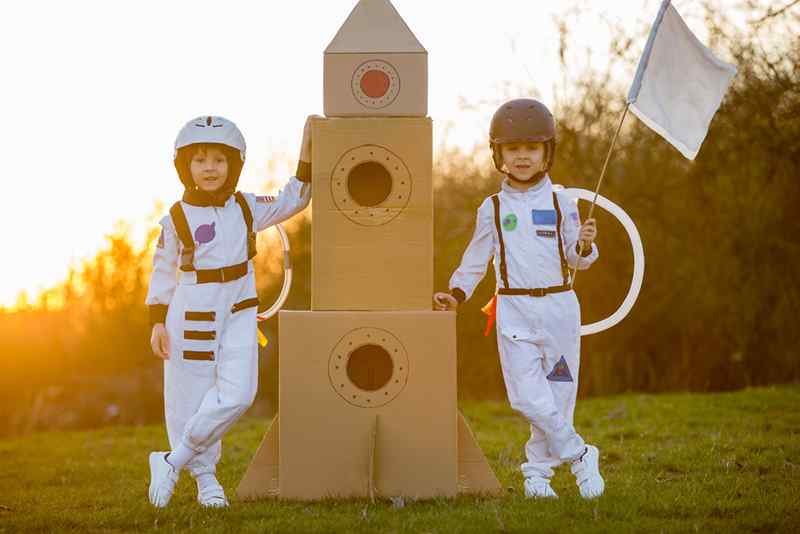
The blank stare your child gives you when you ask them to clean their room—the one that says their mind is currently occupied fighting a dragon or sailing a pirate ship—is not an obstacle. It’s a sign that their most vital, beautiful work is underway. We often treat fantasy and imaginative play as mere entertainment, a way to fill time between structured activities. My own years of watching, reading, and working alongside children have taught me this is profoundly wrong. Fantasy, the kind where the moon whispers and bears talk, is a crucial developmental tool. It’s the engine that powers emotional processing, problem-solving, and the very foundation of creativity.
The real challenge for parents and educators isn’t getting kids to stop dreaming; it’s learning how to effectively use that natural inclination toward the magical. If you want to understand how a story about a brave mouse can help your child handle a difficult day at school, or how to truly encourage the kind of imaginative play that builds lifelong skills, you need to understand the mechanics of fantasy in early childhood. This isn’t about escaping reality; it’s about learning to master it. For resources that help bridge that gap between fun and meaningful learning, I often recommend exploring the content from Bahrku, which provides tools for engaging educational activities. Additionally, for parents looking for enriching video content, they have a great video on turning screen time into learning time.
The Developmental Core: Why Imagination Isn’t Just “Play”
I’ve heard countless times from well-meaning adults: “They’ll grow out of it.” This sentiment misses the point entirely. A child’s ability to invent a world where gravity doesn’t apply is directly related to their adult ability to invent a solution to a problem that has never been solved before. Imagination is the training ground for abstract thought.
When a child uses a block as a phone, they are practicing symbolic representation—a key prerequisite for reading, writing, and advanced mathematics. When they pretend to be a doctor, they are practicing empathy and understanding social roles. This isn’t just theory; it’s something you can observe in real-time. The child who is constantly inventing new games is the one who, later on, is less likely to give up when they hit a roadblock in a school project. They have a muscle for “what if” that has been relentlessly exercised.
The Building Blocks of Imaginative Play
| Developmental Area | How Fantasy Supports It | Real-World Example in Play |
| Cognitive Flexibility | Allows children to hold multiple ideas simultaneously (e.g., the stick is a sword and a magic wand). | Switching roles instantly from “rescuer” to “villain” in a game. |
| Language Development | Encourages the use of complex narrative structures and new vocabulary to describe an invented world. | Speaking in character voices or dictating a long, detailed story about their drawing. |
| Social-Emotional | Provides a safe space to test out intense emotions and social conflicts. | Acting out a scenario where two characters have a disagreement and then negotiate a resolution. |
| Executive Function | Requires planning, sequencing events, and maintaining focus on an imagined goal. | Setting up a detailed “fort” or organizing a play dinner party with specific steps. |
The Captivation: What Makes Magical Elements So Compelling?
Why does the idea of a fire-breathing dragon or a secret door in the bookshelf seize a child’s attention so completely? It’s not just the spectacle; it’s a necessary counterpoint to their current reality.
Young children are constantly faced with a world that is large, confusing, and often feels entirely out of their control. They are told what to do, when to sleep, and where they can go. Fantasy offers a profound psychological release. In a fictional world, the rules are flexible, and the smallest hero can conquer the biggest challenge.
- Mastery Over the Unpredictable: A dragon is scary, but in the story, the child can witness the hero mastering it. This gives them a template for mastering their own scary situations, like a doctor’s visit or starting kindergarten.
- The Power of Agency: In fantasy, children can grant themselves powers they lack in real life—the ability to fly, to talk to animals, or to stop time. This sense of agency is crucial for building self-confidence.
- A World That Matches Their Inner Life: The reality of a child’s emotional life is often large and dramatic, even if the external event is small. A scraped knee feels like a world-ending catastrophe. Fantasy mirrors this inner drama, validating their powerful feelings through equally powerful events (a grand quest, a massive battle).
I remember my own nephew, who was terrified of dogs after a neighbor’s dog barked too loudly at him. For weeks, he refused to walk near that house. We didn’t talk about dogs; instead, we read books about mythical creatures. He soon invented a character, “The Quiet Knight,” whose super-power was a shield that could turn loud noises into soft music. He didn’t magically stop fearing dogs, but he had an imaginative tool—a concept of protection—that he could mentally deploy. That is the quiet power of fantasy.
Processing the Big Feelings: Fantasy as an Emotional Sandbox
This is where the true, deep value of fantasy lies. Children lack the sophisticated vocabulary and cognitive tools adults use to process fear, jealousy, loss, or anger. They can’t sit down and logically dissect an emotion. They need a metaphor.
Fantasy stories—whether in a book, a movie, or an invented game—provide that safe emotional sandbox. When a character in a story struggles with feeling left out, the child can experience and observe that feeling from a distance. They are not the one feeling the pain, but they are learning how to cope with it vicariously. This process is called emotional inoculation.
Case Study: The Fear of Separation
Consider the common anxiety of separation when a parent leaves. A dry, factual explanation that “Mommy will come back” may not soothe a truly anxious child.
| Approach | Focus & Mechanism | Outcome on Emotion |
| Factual Reassurance | Focuses on external reality (time, location). Mechanism is pure logic. | Often fails to address the internal anxiety; the child’s feeling persists. |
| Fantasy-Based Story | Focuses on internal struggle (a character who feels lost but is found). Mechanism is emotional metaphor. | Allows the child to “play out” the fear-loss-reunion cycle safely, making the real-life separation feel less permanent and overwhelming. |
This is why classic fairy tales, despite their sometimes dark themes, persist. They are not meant to be sugar-coated. They are powerful narratives about evil, jealousy, fear, and triumph, giving children symbolic language for the darker corners of human experience.
Fostering the Magic: Practical Ways to Encourage Fantasy
It’s easy to interrupt imaginative play without realizing it. We ask too many direct questions, suggest too many rules, or try to “fix” the imaginary situation. The goal is to be a supportive participant, not a director.
My Experienced Tips for Encouraging Deep Fantasy Play
- Ask Open-Ended Questions: Instead of, “What is that train doing?” which has a simple answer, try: “What is the biggest adventure your train could go on today?” or “What does your brave knight fear the most?” This forces the child to elaborate and deepen the narrative.
- Provide “Loose Parts”: Don’t buy hyper-specific toys that only do one thing. The best props are the ones that require the most imagination. Boxes, blankets, scarves, blocks, sticks, and spoons can be anything from a spaceship to a royal cloak.
- Respect the Rules of the World: If a teddy bear needs to wear a crown to cross the “lava river” (a rug), do not question the logistics. Simply help the teddy bear get the crown. Validating their fantasy world validates their inner creativity.
- Listen and Echo: When your child is describing their game, repeat back an expanded version of what they said. Child: “The dog is sleeping.” You: “Oh, he must be sleeping because he was so busy guarding the whole kingdom all night long! What was he guarding?” This acts like a narrative pump, helping them build momentum.
Beyond the Page: Fantasy in Media and Storytelling
In the digital age, fantasy often comes through screens, which can be just as potent as a physical book, provided the content is well-made. The key is in the story’s depth and the emotional resonance it carries. Good digital storytelling and books offer not just spectacle, but emotional complexity.
A Comparison of Story Depth
| Feature | Surface-Level Content (Lower Value) | Deep Fantasy Content (Higher Value) |
| Conflict Resolution | Solved instantly with a magic spell or a super-power. | Solved through effort, a moral choice, or with the help of a trusted friend/ally. |
| Character Motivation | Simple: The hero wants a trophy or a treat. | Complex: The hero faces a moral dilemma, sacrificing a desire for the greater good. |
| Emotional Arc | Characters are either only happy or only mad. | Characters experience a full range of emotions: fear, triumph, doubt, empathy, and grief. |
The stories that stick with a child are the ones that talk about the things they’re actually worried about, just in a cloak of magic. It’s the reason why a tale about a grumpy troll who learns to share can be more impactful than a simple lesson on generosity. The troll’s grumpiness feels real, and the eventual change feels earned, not just handed out.
Frequently Asked Questions About Fantasy and Play
Does encouraging fantasy confuse my child about what is real?
No. Children are very capable of distinguishing between fantasy and reality, usually by the age of three or four. The ability to engage in “as if” thinking is a sign of cognitive health. They know the block isn’t actually a phone, but they choose to pretend it is. This is a sign of strong imaginative function, not confusion.
How do I know if the fantasy play is becoming excessive or a form of avoidance?
If a child consistently uses fantasy to shut down all interaction, refuses to engage in necessary real-world tasks, or seems highly distressed when forced to leave their imaginary world, it might be worth gentle observation. However, in most cases, deep immersion is a healthy sign of engagement and focused concentration, which we should encourage.
Should I avoid fantasy books that feature scary or sad elements?
It is generally not necessary to avoid them. Age-appropriate stories that include fear, sadness, or a little peril allow children to experience these difficult emotions in a safe, contained environment. These elements provide contrast and make the hero’s ultimate triumph or the moral lesson feel more meaningful and impactful.
What if my child mostly plays alone and just talks to imaginary friends?
Imaginary friends are a normal and healthy part of development. They can signify a high level of creativity and a child’s way of practicing social skills, managing feelings, or testing out new ideas without the risk of real-world social rejection. It’s an internal, safe space for emotional and social rehearsal.
Final Thoughts: The Unspoken Language of Childhood
The journey through early childhood is marked by an endless stream of new experiences that require complex emotional and cognitive processing. We often look for sophisticated, adult methods to help children navigate this, but the best tool is often the one they naturally grasp: the power of fantasy.
I’ve seen firsthand how a child, struggling with the concept of change, found solace in a story about a character whose house could magically transform. The story didn’t change their reality, but it changed their perspective on it. It provided a framework for understanding that change, while scary, is also full of exciting possibilities.
To encourage fantasy is to invest in your child’s emotional intelligence, their problem-solving skills, and their ultimate capacity for innovation. It’s not just about letting them play; it’s about recognizing that when they tell you a dragon is in the living room, they are doing the deep, important work of becoming a well-adjusted, creative, and confident human being. Keep the door to the magical world open—it’s where the real learning happens.